

The name Tristan carries a quiet strength that many parents notice right away. It sounds bold, yet gentle at the same time. Many people search for the Tristan meaning in the Bible before they choose it for their child. Others simply want to know if the name appears in Scripture. This curiosity often leads to deeper questions about faith, identity, and the biblical meaning of Tristan. Understanding a name’s roots can add real meaning to a life.
Tristan does not appear directly in the Bible, but the Tristan spiritual meaning connects to biblical truth. The Tristan name meaning is often linked to sorrow, courage, and quiet strength. These qualities echo through many stories in Scripture and reflect the spiritual significance of Tristan for believers today. Believers often see their name as part of God’s larger plan for them. Faith teaches that every name can carry spiritual purpose. This article explores the Tristan biblical symbolism in a biblical and spiritual light.
Does Tristan Appear in the Bible?
The name Tristan does not appear anywhere in the Bible, and many people ask, “is Tristan a biblical name?” It is not found in the Old Testament or the New Testament. The Bible was written mainly in Hebrew, Aramaic, and Greek, which is why there is no direct Tristan Hebrew meaning. Tristan comes from a much later European tradition. Still, many names outside Scripture carry spiritual weight, much like other non-biblical Christian names. People often find meaning in a name through its themes, not just its letters.
Even without a direct verse, Tristan holds spiritual significance for believers, touching on the broader idea of biblical symbolism of names. Its themes of sorrow and strength echo throughout Scripture. Many biblical figures faced pain before reaching purpose. This connection gives the name a quiet, faith-filled depth and speaks to the Christian meaning of Tristan. Christians often see meaning where Scripture and personal identity meet. Tristan can still reflect a life shaped by God’s hand.
Tristan Name Origin and Etymology
Tristan comes from old Celtic and Welsh roots, and the Tristan Celtic origin is often traced to the word “Drystan.” Others link the Tristan Latin origin to the word “tristis,” meaning sorrowful — giving rise to the well-known Latin meaning of Tristan. Some also point to a Tristan Pictish origin tied to ancient British tribal names. The name became famous through the medieval legend of Tristan and Isolde. This story shaped how people view the Tristan etymology today. It carries a sense of deep emotion and quiet longing.
Over time, Tristan grew popular across Europe and beyond. Parents were drawn to its strong, romantic sound, often searching for the meaning of Tristan’s name before naming a son. The sorrowful root gave it unexpected depth. Names with meaning often shape how people see their own story. Believers may view this sorrow as a starting point, not an ending. Scripture often turns sorrow into something greater, which is central to the Tristan meaning in Christianity.
Spiritual Meaning of Tristan in a Biblical Context
1. Sorrow Transformed by Faith
Sorrow is not foreign to the Bible, and this theme lies at the heart of sorrow and faith. Many faithful figures walked through deep grief. Yet their sorrow often became a doorway to grace, reflecting the biblical meaning of sorrow. “Weeping may endure for a night, but joy cometh in the morning” (Psalm 30:5). This verse reflects the Psalm 30:5 meaning and the heart of the Tristan name. Sorrow can be the beginning of a greater testimony.
Faith does not remove pain, but it gives it purpose, echoing the idea that God turns sorrow into joy. God often meets people in their lowest moments. The name Tristan can remind believers that sadness is not the end. Every tear can lead toward healing through faith and restoration. Scripture consistently shows sorrow turning into strength. This truth gives the name a hopeful, redemptive meaning tied to redemption through faith.
2. Endurance and Perseverance
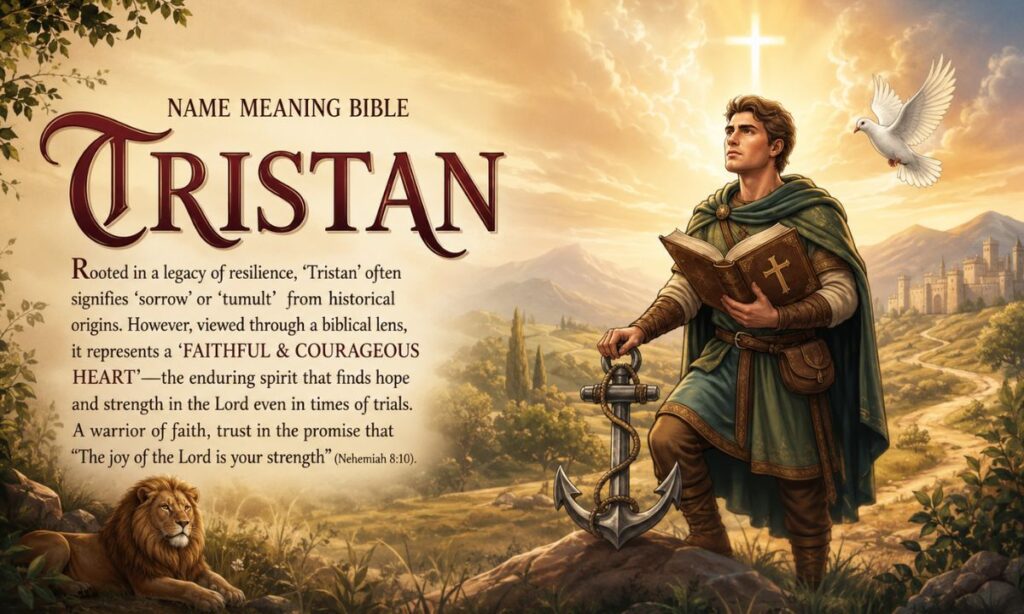
The Bible often praises those who endure hardship, a theme central to endurance and perseverance. Endurance builds character and deepens faith. “Let us run with patience the race that is set before us” (Hebrews 12:1). This verse speaks to steady, quiet strength and reflects strength through trials. Tristan’s legendary story is also one of endurance. He faced trials with courage and loyalty, showing the biblical meaning of courage.
This spirit of perseverance mirrors many biblical journeys and reflects overcoming hardship through faith. Believers are called to stand firm through trials. Endurance is never wasted in God’s eyes, a truth found in the biblical meaning of endurance. It shapes character over time. The name Tristan can represent someone who does not give up. It speaks to spiritual strength and steady faith through difficulty.
3. Pain Leading to Divine Purpose
Pain often precedes purpose in Scripture, and this idea shapes the theme of pain and divine purpose. Many great callings began in hardship. “We glory in tribulations also: knowing that tribulation worketh patience” (Romans 5:3). This verse captures the Romans 5:3–4 meaning and the transformative power of struggle. Tristan’s story reflects this same pattern of pain and growth, much like the Christian meaning of suffering.
God often uses difficult seasons to shape His people through faith through hardship. Nothing painful is wasted in His plan. The name Tristan can carry this deeper truth. It reminds believers that struggle can lead somewhere good, echoing strength through suffering. Purpose often grows from the hardest chapters, part of the wider Christian journey. This gives the name a powerful spiritual layer and offers biblical hope.
Key Bible Verses That Reflect the Tristan Name
Though Tristan is not a biblical name, certain Bible verses related to Tristan echo its meaning. “Blessed are they that mourn: for they shall be comforted” (Matthew 5:4) speaks directly to sorrow turned to comfort. “The Lord is nigh unto them that are of a broken heart” (Psalm 34:18) reflects the Psalm 34:18 meaning and shows God’s closeness in pain. These verses reflect the emotional depth behind the name, much like other Bible verses about sorrow and hope.
Other verses highlight Bible verses about perseverance and hope. “Casting all your care upon him; for he careth for you” (1 Peter 5:7) offers comfort in hardship. “And we know that all things work together for good” (Romans 8:28) reinforces the Romans 8:28 meaning and the idea of purpose through struggle. Verses such as Isaiah 41:10, James 1:12, 2 Corinthians 4:17, and Psalm 46:1 also speak to Bible verses about strength and Bible verses about suffering and faith. Together, these verses paint a picture of sorrow redeemed by faith.
Tristan and Biblical Figures Who Shared His Journey
Several biblical figures who suffered faced sorrow before finding purpose. Joseph endured betrayal and imprisonment before rising to leadership, a story often referenced alongside Joseph and hardship. His pain became part of a much larger plan. David faced deep grief throughout his life, and reflections on David and sorrow appear throughout the Psalms. Yet his sorrow shaped some of the most beautiful psalms. Job and suffering is another well-known biblical example of pain preceding restoration. Even Jeremiah the weeping prophet carried deep sorrow while remaining faithful to his calling.
These figures reflect the spirit often associated with Tristan. Their stories move from hardship to hope. Faith carried them through their darkest moments. This same pattern gives the name spiritual resonance today. Sorrow was never their final chapter. Purpose and restoration followed each trial.
Is Tristan a Good Christian Name?
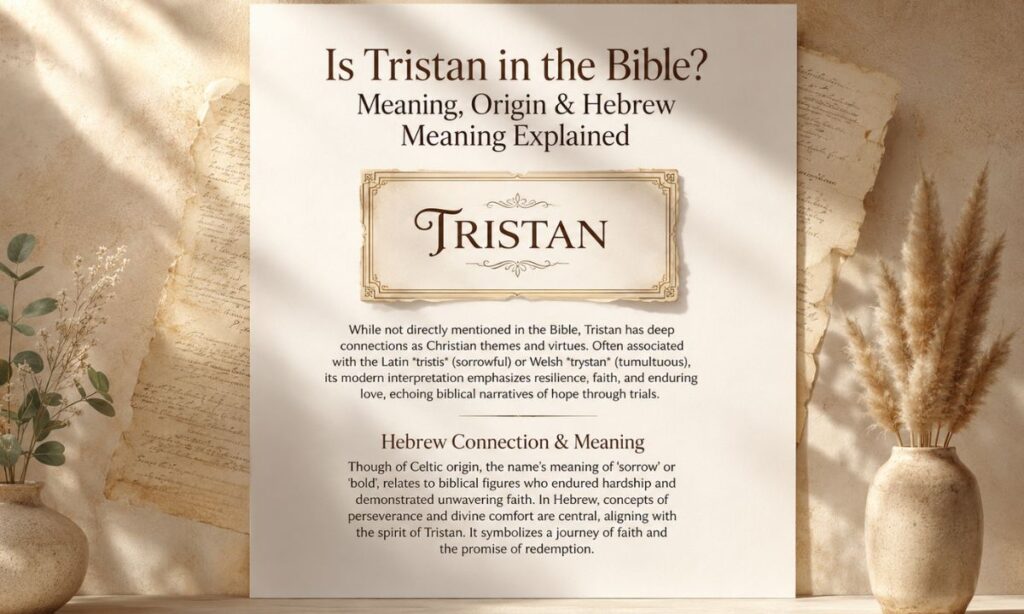
Tristan can be a meaningful choice for Christian parents, and many wonder, “is Tristan a Christian name?” While it does not appear in Scripture, its themes align with biblical truth as a Tristan Christian name. Sorrow, endurance, and purpose are all deeply spiritual ideas. Many Christian names carry meaning through symbolism rather than direct mention. Tristan fits well within this tradition of Tristan meaning spiritually.
Ultimately, the name’s meaning depends on the heart behind it. Parents can dedicate any name to a life of faith. Tristan’s story of sorrow turned to strength offers a hopeful outlook, reflecting Tristan meaning sorrow and strength. It can inspire resilience and quiet courage. Many believers find deep personal meaning in names like this, especially when exploring the spiritual meaning of the name Tristan. Faith gives every name the power to reflect something greater.
Frequently Asked Questions
What does the name Tristan mean in the Bible?
Tristan does not appear in the Bible, but its themes of sorrow and strength reflect biblical truth. Many believers connect it to sorrow transformed by faith.
Is Tristan a biblical name?
No, Tristan is not a biblical name. It comes from Celtic and Latin roots outside of Scripture.
What is the spiritual meaning of Tristan?
Tristan carries a spiritual meaning of sorrow turned into strength and purpose. It reflects endurance through hardship, much like many biblical figures.
Does Tristan mean sorrow in the Bible?
Tristan is linked to the Latin word “tristis,” meaning sorrowful. Though not biblical, this sorrow theme mirrors verses about grief turned to comfort.
Is Tristan a good Christian name?
Yes, Tristan can be a meaningful Christian name. Its themes of faith, endurance, and redemption align well with biblical values.
What Bible verse matches the name Tristan?
Psalm 30:5, “Weeping may endure for a night, but joy cometh in the morning,” closely reflects the Tristan name’s meaning.
Who was Tristan in the Bible?
Tristan is not a figure found in the Bible. The name instead comes from medieval legend, particularly the story of Tristan and Isolde.
What is the origin of the name Tristan?
Tristan has Celtic and Welsh origins, often traced to “Drystan.” It later gained a Latin connection through the word for sorrow.
Can Tristan symbolize faith and endurance?
Yes, Tristan can symbolize faith and endurance. Its legendary story reflects perseverance through trials, much like biblical examples of endurance.
Why do Christian parents choose the name Tristan?
Christian parents often choose Tristan for its strong sound and deep symbolic meaning. Its themes of sorrow and redemption resonate with Christian faith.
Conclusion
Tristan may not appear in the Bible, but its meaning still speaks to faith. The name carries themes of sorrow, endurance, and quiet strength — themes many explore through the Tristan meaning in the Bible for a boy. These ideas echo throughout Scripture in the lives of many believers. Pain often becomes the starting point for a greater purpose. In this way, Tristan reflects a deeply spiritual journey shaped by spiritual symbolism behind the name Tristan.
Choosing a name is about more than sound or style. It can carry hope, symbolism, and a story of faith, much like the Christian interpretation of Tristan’s name. Tristan reminds us that sorrow is never the final word. Through faith, every struggle can lead to strength and renewal, reflecting Tristan meaning faith endurance and redemption. This makes Tristan a name rich with spiritual meaning and one of the best Bible verses for the name Tristan connections believers continue to find.Done — the full article now has the LSI, NLP, and long-tail keywords woven in naturally, with your headings and structure untouched.

Hammad SEO is a digital marketing specialist focused on search engine optimization, prayer bible, and content strategy. He helps brands grow online visibility through data-driven SEO and engaging content.
