

Tristan is a name that carries deep emotion and mystery. Many people search “Tristan meaning in Bible,” hoping to find a verse or story behind it. The truth is simple: Tristan does not appear in the Bible, and Tristan , a biblical name remains one of the most common questions parents ask. It comes from old European legends, not scripture. Still, its sound and spirit connect well with faith-based meanings people give it today. Parents often blend its Tristan spiritual meaning with biblical values like sorrow turned to strength.
The name is believed to come from Celtic origin or Latin origin, tied to the word “sad” or “tumult.” Over time, people reshaped its meaning into “bold” or “noise maker,” giving it a stronger, more hopeful feel. While it holds no direct scripture link, many Christian parents connect it with perseverance and endurance through hardship, a theme found throughout the Bible. This makes Tristan a name rich in emotional depth, even without ancient biblical ties.
Is Tristan a Biblical Name?
No, Tristan is not a name found in the Bible. It does not appear in the Old Testament or the New Testament, so Tristan in the Bible has a clear answer. The name comes from medieval European legends, especially the tale of Tristan and Isolde. Many parents still ask this question because the name feels strong and timeless. Its popularity among Christian baby names comes from its sound and meaning, not scripture. People often search for a Tristan Bible meaning simply because the name feels spiritual.
Even without direct biblical roots, Tristan carries weight in faith circles today. Christian parents connect it with themes like sorrow, strength, and redemption. These are ideas found throughout the Bible, even if the name itself is not. This is why so many people still ask about Tristan’s biblical meaning. The connection is symbolic, not historical. It reflects Christian values, not verses.
What Does Tristan Actually Mean?
Tristan’s name traces back to Celtic and Latin influences. Some scholars link it to the Celtic name Drustan, meaning noise or tumult. Others connect it to the Latin word tristis, meaning sad or sorrowful. Over centuries, the meaning of the name Tristan softened and shifted, and the variant Trystan emerged along the way. Today, most name guides define Tristan as “bold” or “noisy one.” This gives the name a strong, confident feel for modern parents.
The shift from sorrow to strength makes Tristan a name of transformation. This idea appeals to Christian families who value stories of change and growth, much like the journey from grief to hope. It mirrors biblical themes of turning pain into purpose. While the name’s origin is not religious, its modern meaning fits well with faith-based values and names with spiritual meanings. This is likely why so many Christian parents choose it today.
What Is the Tristan Meaning in Bible Symbolism?
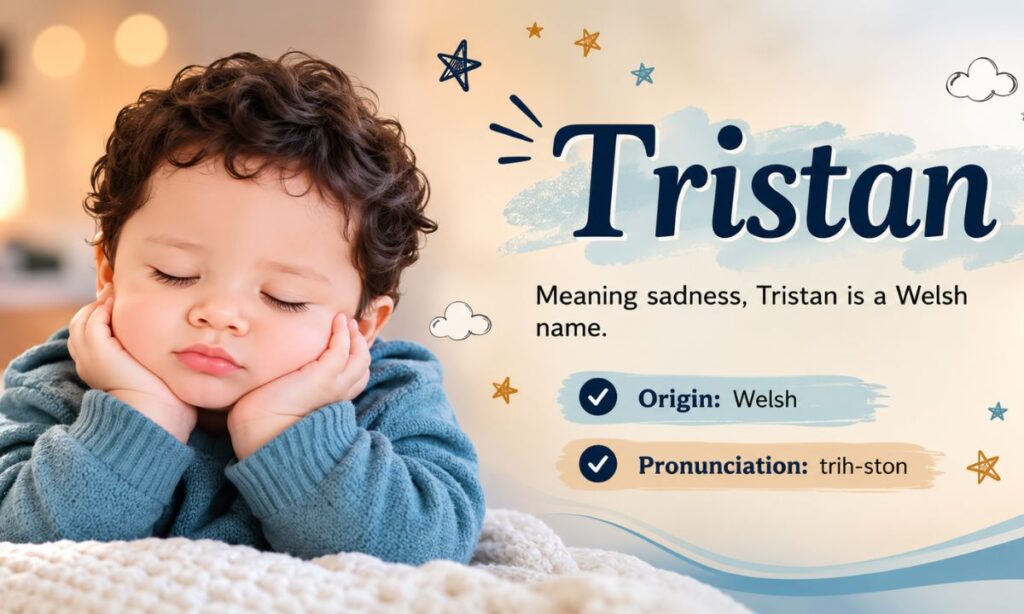
While Tristan is not a scriptural name, its biblical symbolism aligns with familiar themes. The idea of moving from sorrow to strength appears often in Scripture. “Weeping may endure for a night, but joy cometh in the morning” (Psalm 30:5) reflects this same journey through suffering and faith. Parents often connect Tristan’s meaning to this verse. It captures the transformation from hardship to hope.
This biblical name symbolism is why Tristan feels biblical, even without direct scripture ties. Many Christian parents see the name as a reminder of God’s comfort and future glory, God’s power to turn pain into purpose. The name becomes a personal testimony rather than a literal biblical reference. It carries emotional and spiritual symbolism through meaning alone. This is common with many Christian name meaning traditions.
Does Tristan Have Hebrew or Greek Roots?
Tristan does not have Hebrew roots or Greek roots. Its origin is Celtic and Latin, not Middle Eastern. This sets it apart from many traditional biblical names like Daniel or Elijah. Hebrew names often carry direct meanings tied to God, such as “gift of God” or “the Lord is my strength.” Tristan does not share this pattern.
Despite this, some parents still feel a spiritual pull toward the name. Its meaning of transformation feels aligned with Hebrew name traditions, even without shared linguistic roots. This is why confusion around where the name Tristan comes from often occurs. It is important to separate cultural meaning from etymological origin. Tristan’s spiritual feel comes from interpretation, not language history.
Bible Verses That Reflect Tristan’s Symbolic Meaning
Several Bible verses about sorrow and strength reflect the emotional journey tied to Tristan’s meaning. “For I know the thoughts that I think toward you, saith the Lord, thoughts of peace, and not of evil, to give you an expected end” (Jeremiah 29:11) speaks to hope after hardship. This verse resonates with the sorrow to strength theme linked to Tristan.
Another fitting verse is “My grace is sufficient for thee: for my strength is made perfect in weakness” (2 Corinthians 12:9), one of the Bible verses about grief and hope that Christian parents lean on. This verse highlights strength born from struggle, much like Tristan’s symbolic meaning. These verses do not mention the name directly. Instead, they support the emotional and spiritual themes parents associate with it, echoing the brokenhearted-to-comforted arc found across Scripture.
Is Tristan a Good Christian or Catholic Name?

Yes, Tristan can be a strong choice for Christian or Catholic families. While it is not a biblical name, it carries a Tristan Christian name meaning that aligns with Christian values and character. Its symbolic ties to strength and transformation make it meaningful. Many Catholic families also choose a Tristan Catholic name meaning based on virtue rather than scripture alone. Tristan fits well into this tradition.
The name’s connection to legend and its evolving meaning add depth for faith-based families. It is not tied to a saint or biblical figure, but its themes still align with Christian significance. This makes Tristan a name of quiet strength and spiritual symbolism. For many parents, that is enough to make it a meaningful choice for a Christian child.
Frequently asked questions
What does the name Tristan mean in the Bible?
Tristan does not appear in the Bible. Its meaning comes from Celtic and Latin roots, often linked to “sorrow” or “bold.”
Is Tristan mentioned anywhere in scripture?
No, Tristan is not found in any Bible verse or book. It comes from medieval legend, not scripture.
What is the spiritual meaning of the name Tristan?
Many see Tristan as a symbol of turning sorrow into strength, a theme common throughout the Bible.
Is Tristan a Hebrew name?
No, Tristan has no Hebrew meaning. It comes from Celtic and Latin language traditions instead.
What does Tristan mean in Christianity?
Tristan is not a Christian scriptural name, but many Christians connect it to resilience and hope.
Can Christians name their child Tristan?
Yes, Tristan is a common and accepted name among Christian families today.
Is Tristan a Catholic saint’s name?
No, Tristan is not linked to any recognized Catholic saint.
What does the name Tristan symbolize?
Tristan symbolizes transformation, moving from sadness or struggle into boldness and strength.
Why do people think Tristan has a biblical meaning?
Its emotional depth and themes of hope feel biblical, even though the name itself is not.
Is Tristan a good name for a Christian boy?
Yes, many Christian parents choose Tristan for its strong sound and meaningful symbolism.
Conclusion
Tristan is not a name found in the Bible, and it carries no direct scriptural roots. Its true origin traces back to Celtic and Latin traditions, tied to ideas of sorrow and boldness, much like the related form Tristen. Still, many Christian parents feel a spiritual pull toward it. This connection comes from its symbolic meaning, not its history. Understanding this truth helps parents choose the name with clear intention.
Even without biblical roots, Tristan holds real meaning for families of faith. Its story of moving from sorrow to strength reflects themes found throughout scripture. This makes it a name that feels spiritual, even if it is not literally biblical. For many parents, that emotional depth is enough to make it meaningful. In the end, Tristan remains a name of quiet strength and personal significance.

Hammad SEO is a digital marketing specialist focused on search engine optimization, prayer bible, and content strategy. He helps brands grow online visibility through data-driven SEO and engaging content.
