

Your health matters. But many women put it last. You care for your family, your job, and your home. Your own check-ups slip down the list. That is very common. Still, small steps today can protect you for years. A simple women’s health checkup list is a good place to start. Women’s preventive health care is one of those steps.
Preventive care means finding problems early. Many health issues show no signs at first. A simple screening can catch them in time. Early detection and disease prevention often make care easier and less costly. It also gives you peace of mind. So a yearly women’s annual wellness exam is worth the time.
Every woman’s needs are different. Your age, family history, and lifestyle all play a part. That is why a talk with your doctor is so important. Some preventive health screenings for women may apply to you now. Others may come later in life. Your doctor can guide you on what fits.
Why Women’s Preventive Care Matters
Preventive care is about staying well before you get sick. It is not only for people with health problems. Preventive care for adult women matters even when you feel fine. Regular visits help you know your normal. That makes it easier to spot changes early.
Many serious conditions start quietly. You may feel fine for a long time. Routine medical tests for women can find a problem before it grows. This gives you more choices and better odds. It also saves stress, time, and money later.
Early Detection Can Change What Happens Next
Finding a problem early often means simpler care. A small issue is easier to treat than a large one. Cancers, heart disease, and diabetes are good examples. Screenings can catch them before symptoms show. That early window is why early detection and disease prevention matter so much.
Early detection also gives you time to plan. You can ask questions and get a second opinion. You can make lifestyle changes with your doctor’s help. Good preventive healthcare recommendations for women help you avoid panic. Knowledge puts you back in control.
Choose a Doctor You Can Speak Openly With
Good care starts with honest talk. You may need to share private things. That is easier with a doctor you trust. Look for someone who listens and does not rush you. You should feel safe asking about women’s primary care screening tests.
Be open about your habits, stress, and family history. Do not hide things out of shame. Your doctor has heard it all before. The more they know, the better they can plan your women’s routine health examinations. If the fit feels wrong, it is fine to switch.
Health Screenings to Discuss at Different Life Stages
Your health needs change as you age. A screening that matters at 25 may differ from one at 55. Women’s health screening by age is a helpful way to plan. Guidelines also vary by country and by group. Your own history can shift the timing too. That is why a personal talk with your doctor matters.
Think of each decade as a new check-in. Ask what is due now and what is coming next. Write down your questions to ask your doctor about preventive care, and track the answers. A women’s health checkup schedule makes this easier. Do not wait for symptoms to book a visit. Staying ahead is the whole point of preventive care.
In Your 20s and 30s
Preventive care recommendations for young women start with building healthy habits. Essential medical tests for women in their 20s and 30s often begin with cervical cancer screening around age 21. Cervical cancer screening guidelines usually include a Pap test and sometimes an HPV test. Your doctor will tell you how often you need it. Blood pressure screening for women should also be part of your visits.
Talk about sexual health and birth control as well. Ask about sexually transmitted infection screening if it applies to you. If you plan to have a baby, ask about prenatal care early. Discuss immunizations recommended for women, such as HPV and flu shots. Share any family history of cancer or heart disease.
In Your 40s and 50s
This stage brings new screenings. Routine health tests for women over 40 often include mammograms. Breast cancer screening recommendations include mammogram screening by age 40 in many guidelines. Colorectal cancer screening guidelines often begin around age 45. Cholesterol screening recommendations and blood sugar tests also become more important. Your doctor will help you pick the right schedule.
Hormone changes may begin during these years. Periods can shift and sleep may suffer. Mention these changes at your visit. Health screenings for women over 50 often include these talks too. They are common, and help is available. Do not just push through unusual symptoms.
After 60
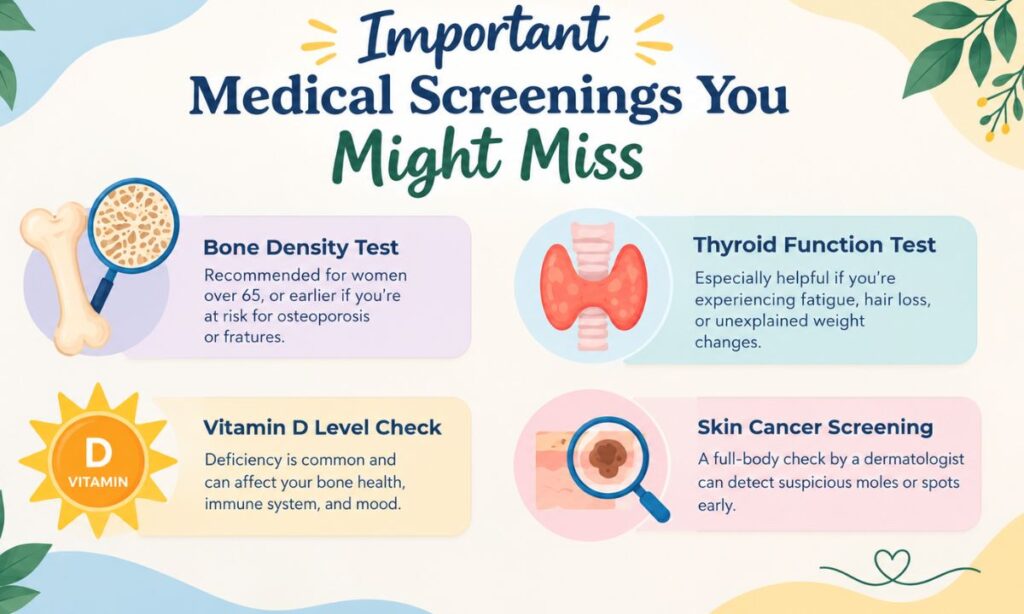
Bone health becomes a bigger focus. A bone density test for women checks for weak bones. Osteoporosis screening for women is advised by many guidelines from around age 65, or earlier if you have risk factors. Falls and fractures can be serious at this age. Early care can lower that risk.
Keep up with heart, cancer, and diabetes screening for adult women. Ask how long you should continue each one. Some women can stop certain tests at a set age. That depends on your past results and your health. Ask about vaccines like shingles and pneumonia too.
Important Screenings That Are Easy to Overlook
Many women know about mammograms and Pap tests. Fewer think about the other essential health tests for women. These tests can find hidden problems too. They often get skipped because they feel less urgent. But small gaps in care can add up.
Bring up these topics even if you feel healthy. Your doctor can tell you if they apply to you. Preventive screenings based on age and risk factors can be routine or tailored. A short question can save you a lot of trouble. It never hurts to ask.
Thyroid, Anemia, and Other Lab Testing
Blood tests are preventive medical tests for women that can show things you cannot feel. Your thyroid affects energy, weight, and mood. Anemia can cause tiredness and weakness. Many women live with these signs for years. They often blame stress or a busy life.
Ask your doctor if lab work makes sense for you. Tell them about fatigue, hair changes, or heavy periods. Vitamin levels may also be worth checking. Diabetes screening for adult women and cholesterol tests are common too. One blood draw can answer many questions.
Vision, Hearing, and Skin Health
Regular health checkups for females should cover eyes, ears, and skin. Eye exams can find glaucoma and other issues early. They can also catch signs of diabetes. Hearing loss often happens slowly, so you may not notice it. A simple hearing test can reveal changes.
Skin checks are important as well. Look for moles that change in size or color. Use sunscreen and see a doctor about spots that worry you. Early skin cancer is often very treatable. Do not ignore a sore that will not heal.
Sexual Health and Menopause

Sexual health is part of overall health. Many women feel shy to bring it up. Yet pain, low desire, or dryness are common concerns. Your doctor can help without judgment during a women’s reproductive health checkup. STI screening may also be needed at any age.
Menopause deserves an open talk too. Hot flashes, poor sleep, and mood shifts can affect daily life. There are many ways to ease these symptoms. Your doctor can explain the options and risks. You do not have to suffer in silence.
Personalizing Your Preventive Care Plan
No two women have the same health story. A plan that fits your friend may not fit you. Your age, family, and habits all shape your needs. A personalized women’s healthcare plan makes care more useful. It also helps you avoid tests you do not need.
Build your plan together with your doctor. Review it once a year. Update it when your life or health changes. You can compare it with the women’s health screenings recommended by the CDC. A good plan follows trusted women’s preventive care guidelines and is easy to follow.
Review Your Personal Risk Factors
Risk factors are things that raise your chances of a condition. Family history is a big one. So are smoking, weight, and certain past illnesses. Some women need screening earlier or more often. Family history and preventive health screening go hand in hand, so share the details.
Make a list before your visit. Note which relatives had cancer, heart disease, or diabetes. Include how old they were at diagnosis. Mention your own past test results. This helps your doctor set the right schedule for you.
Keep Your Health Information Organized
Messy records cause missed care. Keep your test dates and results in one place. A simple folder or notebook works well. Some trusted health sites offer a women’s health screening checklist PDF you can print. Add your medicines, vaccines, and doctor names.
Bring this record with you to visit. It helps if you see more than one doctor. It also helps in an emergency. Ask for copies of your results. Your health story should always be within reach.
Use Digital Tools for Follow-Up
Phones can make follow-up easier. Many clinics offer patient portals. You can see results, book visits, and message your doctor. This saves calls and waiting. It also keeps your records safe in one spot.
Use reminders for screenings and refills. Set an alert when a test is due. Save a women’s wellness checkup guide on your phone for quick follow-up. Health apps can track habits like sleep and steps. Tools help, but they do not replace real advice.
Lifestyle Habits That Support Preventive Health
Recommended health screenings for women find problems, but daily habits help prevent them. Small choices add up over time. You do not need a perfect routine. You only need steady, simple steps. Even small changes can lower your risk.
Pick one habit to start with. Build on it slowly. Ask your doctor what matters most for you. Be kind to yourself along the way. Progress is better than perfection.
Nutrition, Movement, and Sleep
Eat more whole foods like fruit, vegetables, and grains. Choose lean protein and healthy fats. Cut back on sugary drinks and heavy processed foods. Drink enough water through the day. These habits support your heart and energy.
Move your body most days. A daily walk counts. Aim for rest too, as most adults need seven or more hours of sleep. Poor sleep can hurt mood and health. Healthy routines work best when you stick with them.
Supplements Should Be Individualized
Supplements are not right for everyone. More is not always better. Some can clash with your medicines. Others may be useless if you already eat well. Do not guess about what you need.
Ask your doctor before you start any. Blood tests can show if you are low in something. Common examples are vitamin D, iron, or folate. Your needs may change with age or pregnancy. Choose trusted brands and follow the label.
Mental Health Belongs in Preventive Care
Your mind is part of your health. Stress, low mood, and anxiety are common in women. They can affect sleep, appetite, and relationships. Many doctors now offer mental health screening for women, including depression checks at routine visits. Be honest if you do not feel like yourself.
Asking for help is a sign of strength. Talk therapy, support groups, and other care can help. Rest, friends, and hobbies also matter. Do not wait until things feel unbearable. Early support can make a real difference.
How to Choose the Right Provider for Women’s Preventive Care
The right provider makes care easier. You may choose a family doctor, a gynecologist, or a women’s health clinic. Think about what you need most. Some women like one doctor for everything, including the annual physical exam for women. Others prefer a specialist for certain needs.
Take your time with this choice. Read reviews and ask friends for advice. Check what your insurance covers. Notice how you feel after the first visit. A good match helps you stay on track for years.
Look for Clear Communication
A good provider explains things in plain words. They answer your questions without rushing. They listen to your concerns and take them seriously. You should leave each visit knowing the next steps. Confusing advice is a red flag.
Notice if they respect your choices. A good doctor shares options and does not push you. They welcome questions about tests and costs. You should feel like a partner in your care. Trust grows from this kind of talk.
Consider Access and Convenience

Care only helps if you can get it. Check the clinic’s location and hours. Ask how fast you can get an appointment. Find out if they offer video visits. Easy access makes you more likely to go.
Look at cost and insurance too. Ask what preventive visits are covered. Many plans cover recommended medical screenings for adults at low or no cost. Check for female providers if that matters to you. Pick a place that fits your real life.
Frequently asked questions
What is women’s preventive care?
Women’s preventive health care means regular check-ups and screenings that find health problems early. It also includes vaccines and healthy habit advice.
What health screenings should I talk to my doctor about?
A women’s health checkup list usually includes Pap and HPV tests, mammograms, and blood pressure, cholesterol, and blood sugar checks. Your doctor will pick the right ones for your age and risk.
How often should women get a preventive care visit?
Most women do well with a yearly check-up. Your doctor may change how often you need routine health checkups based on your age and health.
At what age should women start getting mammograms?
Many guidelines suggest starting mammogram screening around age 40. Ask your doctor if you should start earlier due to family history.
When should I start cervical cancer screening?
Screening usually begins around age 21. Pap smear and HPV testing guidelines depend on your age and results.
What screenings do women need in their 40s and 50s?
Mammograms, colorectal cancer screening, and cholesterol and blood sugar tests are common. Talk about menopause symptoms at this stage too.
Do women need a bone density test?
Many women get a bone density test around age 65, or sooner if they have risk factors. It checks for weak bones and helps prevent fractures.
Are blood tests part of women’s preventive care?
Yes, they can check for thyroid problems, anemia, diabetes, and cholesterol. Your doctor will order the ones that fit your needs.
Is mental health part of preventive care?
Yes, mental health screening for women is often part of routine visits. Share how you feel so you can get support early.
How do I prepare for a preventive care appointment?
Write down your family history, symptoms, and questions. Bring your medicine list and past test results if you have them.
Conclusion
Taking care of your health is one of the best gifts you can give yourself. Women’s preventive care helps you find problems before they grow. Screenings, check-ups, and healthy habits all work together. They give you more choices and more peace of mind. Small steps today can protect your future.
You do not have to do it all at once. Start with one simple step. Book your yearly visit and share your family history. Ask your doctor which screenings fit your age and needs. Then keep your women’s health checkup list so you never miss a due date. Your health deserves a place at the top of your list.

Hammad SEO is a digital marketing specialist focused on search engine optimization, prayer bible, and content strategy. He helps brands grow online visibility through data-driven SEO and engaging content.
